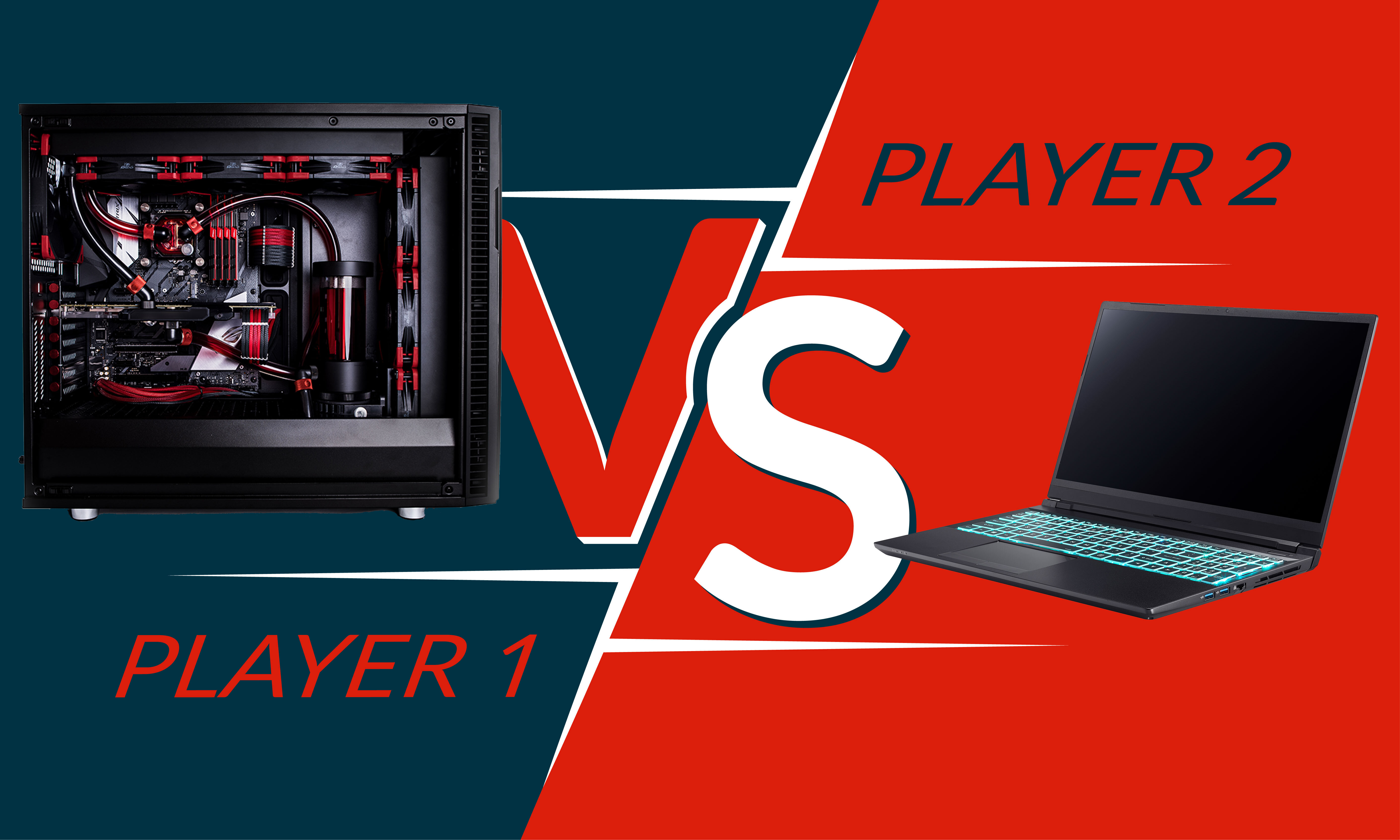
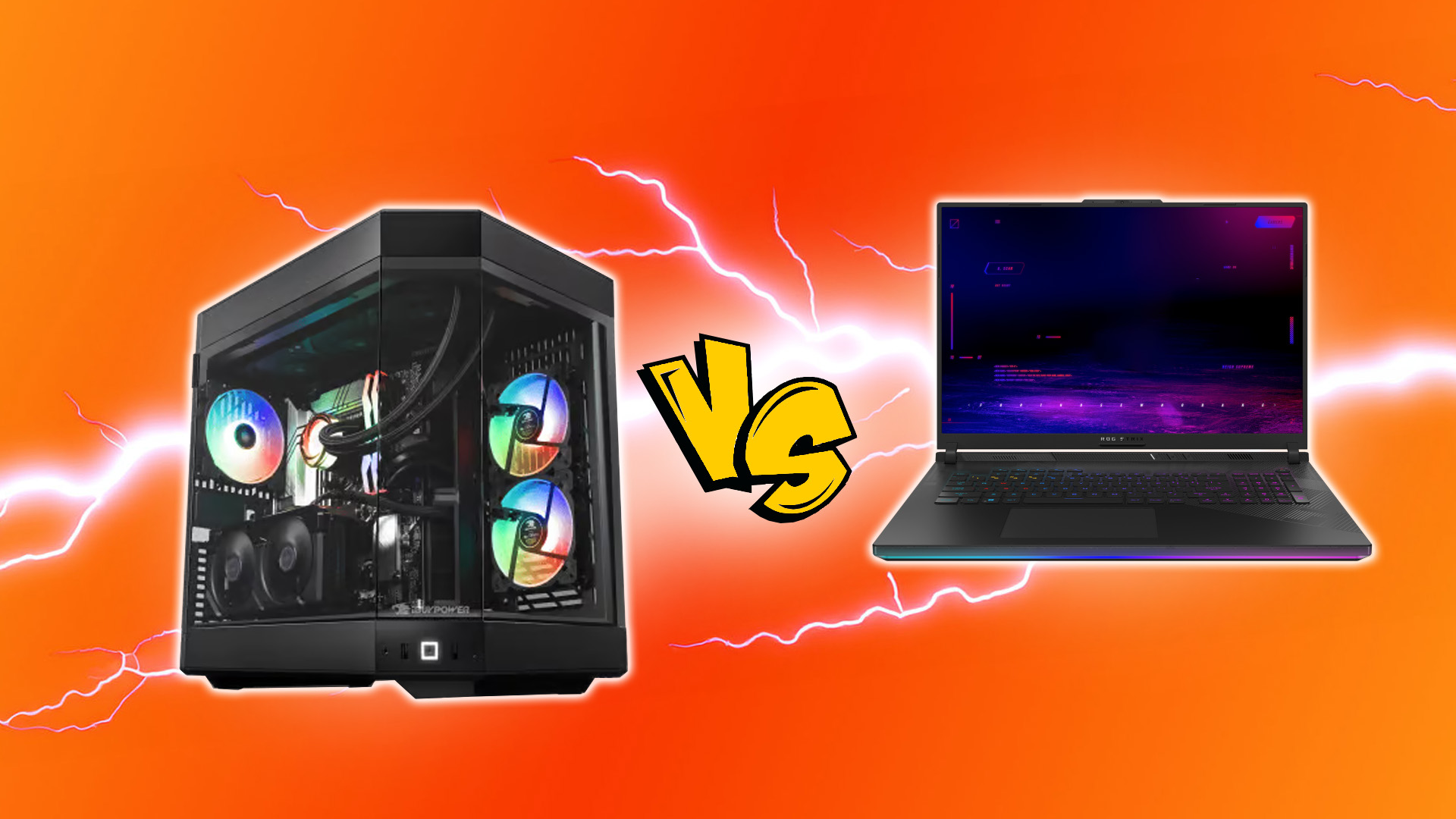
Gaming PC vs. Gaming Laptop: A Head-to-Head Comparison
In the ever-evolving landscape of digital entertainment, the choice between a Gaming PC (desktop) and a Gaming Laptop remains one of the most fundamental and hotly debated decisions for enthusiasts. Both platforms offer distinct advantages and disadvantages, catering to different needs, budgets, and priorities. This comprehensive head-to-head comparison aims to dissect every crucial aspect, from raw performance and upgradeability to portability and cost, helping you make an informed decision on which gaming machine truly reigns supreme for your specific requirements.
Introduction: The Eternal Dilemma
For decades, the desktop PC has been the undisputed king of gaming, synonymous with unparalleled power, customizability, and the ultimate immersive experience. However, recent advancements in mobile technology have propelled gaming laptops into a formidable position, challenging the desktop’s dominance with increasingly potent hardware packed into sleek, portable chassis. What was once a clear-cut choice has now become a complex deliberation, with each option presenting a compelling case.
This article will delve deep into the core components and experiential factors that differentiate these two gaming titans. We’ll explore where each excels, where they falter, and ultimately, who stands to benefit most from choosing one over the other.
1. Performance: The Raw Power Struggle
When it comes to gaming, performance is often the first metric gamers consider. It dictates frame rates, graphical fidelity, and the overall smoothness of gameplay.
Gaming PC (Desktop):
Desktops have traditionally held an insurmountable lead in raw performance, and for good reason.
- Graphics Card (GPU): Desktop GPUs are the powerhouse of any gaming rig. They are typically larger, have higher thermal design power (TDP), and benefit from more robust cooling solutions. This allows them to run at higher clock speeds for longer periods, delivering significantly more frames per second than their laptop counterparts, even when sharing the same model number (e.g., a desktop RTX 4080 will outperform a laptop RTX 4080). The ability to integrate multiple GPUs (though less common now) or simply choose the absolute top-tier cards like the RTX 4090 with ample thermal headroom is a desktop exclusive.
- Processor (CPU): Desktop CPUs, like Intel’s Core i9 or AMD’s Ryzen 9 series, often boast higher core counts, higher base and boost clock speeds, and greater cache sizes than their mobile equivalents. Crucially, they operate with much higher power limits and have access to superior cooling, preventing thermal throttling and ensuring sustained peak performance during demanding gaming sessions or multi-tasking.
- RAM: While both platforms use similar DDR4 or DDR5 RAM, desktops often support more RAM slots (typically 4, sometimes 8), allowing for greater capacity (e.g., 64GB or 128GB) and often higher clock speeds, contributing to overall system responsiveness.
- Storage: Both utilize NVMe SSDs for blistering fast load times. However, desktops typically offer more M.2 slots and SATA ports, enabling users to install multiple high-capacity SSDs and traditional HDDs for vast game libraries and media storage without compromise.
Gaming Laptop:
Gaming laptops have made incredible strides, but inherent limitations persist.
- Graphics Card (GPU): Laptop GPUs, though bearing similar names to desktop variants, are "Max-Q" or "Max-P" versions, designed for power efficiency and thermal constraints. They operate at lower clock speeds and consume less power, resulting in a noticeable performance gap compared to desktop GPUs. While a high-end laptop GPU can run most modern games admirably, it will rarely match its desktop counterpart’s frame rates at equivalent settings.
- Processor (CPU): Mobile CPUs are optimized for lower power consumption and heat output, necessary for a compact form factor. While powerful (e.g., Intel’s HX series or AMD’s HS/HX series), they typically have fewer cores or lower clock speeds than desktop CPUs, and are more susceptible to thermal throttling under prolonged heavy loads.
- RAM: Most gaming laptops come with 2 RAM slots, supporting up to 32GB or 64GB. While sufficient for most gaming, upgrade options are more limited than desktops.
- Storage: Laptops usually offer one or two M.2 NVMe SSD slots. While fast, expanding storage beyond these slots often means replacing existing drives or relying on external solutions.
Verdict on Performance: For absolute, uncompromised raw power and frame rates, the Gaming PC remains the undisputed champion. It consistently delivers superior performance due to fewer thermal and power limitations.
2. Upgradeability & Longevity: Future-Proofing Your Investment
The ability to upgrade components is a critical factor for long-term value and adapting to future gaming demands.
Gaming PC (Desktop):
This is where desktops truly shine.
- Modularity: Almost every major component in a desktop PC is modular and user-replaceable: GPU, CPU, RAM, storage, power supply, motherboard, and cooling system. This allows gamers to incrementally upgrade parts as new technology emerges or as their budget permits.
- Cost-Effective Upgrades: Instead of buying an entirely new system, a desktop owner can simply replace a GPU or CPU to extend the life of their rig by several years. This significantly reduces the long-term cost of staying at the cutting edge.
- DIY Friendly: The open nature of desktop cases and standardized components makes upgrades and repairs relatively straightforward for those with basic technical knowledge.
Gaming Laptop:
Upgradeability is severely limited in gaming laptops.
- Limited Scope: Typically, only RAM and storage (SSD) are user-upgradeable. The GPU and CPU are almost always soldered directly to the motherboard to maintain the compact design and thermal integrity.
- Faster Obsolescence: When a laptop’s CPU or GPU can no longer keep up with modern games, the only real option is to replace the entire laptop. This leads to a higher recurring cost over time if you want to maintain high-performance gaming.
- Specialized Repairs: If a core component fails (like the GPU or motherboard), repairs can be complex, expensive, and often require specialized service centers.
Verdict on Upgradeability: The Gaming PC is the clear winner. Its modular design offers unparalleled longevity and cost-effective upgrades, making it a more future-proof investment.
3. Portability & Form Factor: Gaming on the Go vs. The Dedicated Battlestation
This is perhaps the most obvious differentiating factor between the two platforms.
Gaming Laptop:
Portability is the laptop’s raison d’être.
- Mobility: The ability to game anywhere – a friend’s house, a LAN party, a coffee shop, or even just another room in your home – is the laptop’s greatest strength. It’s a self-contained unit with an integrated screen, keyboard, and trackpad.
- Space-Saving: Laptops take up minimal desk space and can be easily stowed away when not in use, making them ideal for smaller living spaces or dorm rooms.
- Integrated Peripherals: While often not ideal for serious gaming, having a built-in screen and keyboard means you don’t need external peripherals to start gaming immediately.
Gaming PC (Desktop):
Desktops are inherently stationary.
- Fixed Location: A desktop PC requires a dedicated space, including a monitor, keyboard, mouse, and speakers. It’s designed to be a permanent fixture.
- Bulk & Weight: Even compact desktop builds are far less portable than laptops, requiring significant effort to move, disconnect, and reconnect.
- Ergonomics: While fixed, this allows for a highly ergonomic setup with large, high-refresh-rate monitors, mechanical keyboards, and precision gaming mice, all customizable to the user’s preference.
Verdict on Portability: Gaming Laptops are the undeniable champion for mobility and space-saving. If gaming on the go is a priority, the laptop is your only real choice.
4. Cost & Value: Initial Investment vs. Long-Term Expenses
The financial aspect is a major consideration for most gamers.
Gaming PC (Desktop):
The cost structure of a desktop PC can be complex.
- Initial Cost (Higher for complete setup): While a desktop tower might seem cheaper than a comparably spec’d laptop initially, you must factor in the additional cost of essential peripherals: a high-refresh-rate gaming monitor, a gaming keyboard, a gaming mouse, and speakers/headset. These can easily add several hundred to over a thousand dollars to the total price.
- Performance-Per-Dollar (Better): When comparing just the core components (CPU, GPU, RAM, Storage), desktops generally offer significantly better performance for the same price point than laptops. You get more raw power for your buck.
- Long-Term Value (Better): Due to superior upgradeability, a desktop PC often has a lower total cost of ownership over many years. You can upgrade individual components instead of replacing the entire system, saving money in the long run. Parts also tend to retain their value better for resale.
Gaming Laptop:
Laptops present a different cost dynamic.
- Initial Cost (Lower for complete setup): A gaming laptop is an all-in-one solution. The price you see is generally the price you pay to start gaming, as it includes a screen, keyboard, and trackpad. This can make them seem more affordable upfront, especially at entry-to-mid-range price points.
- Performance-Per-Dollar (Lower): Due to the miniaturization and cooling challenges, laptop components (especially GPUs) are more expensive to manufacture and integrate. You typically pay a premium for the portability, meaning you get less raw performance for each dollar spent compared to a desktop.
- Long-Term Value (Lower): With limited upgradeability, a gaming laptop essentially becomes a disposable unit when its core components can no longer handle modern games. This necessitates buying a completely new system every few years, leading to a higher long-term cost of ownership.
Verdict on Cost: For initial, all-inclusive entry, laptops can sometimes appear cheaper. However, for sheer performance-per-dollar and long-term value through upgrades, the Gaming PC offers a more economically sound investment.
5. Thermals, Noise & Power Consumption: Keeping Cool Under Pressure
Heat is the enemy of performance, and how a system manages it significantly impacts user experience.
Gaming PC (Desktop):
Desktops have a distinct advantage in thermal management.
- Superior Cooling: Larger chassis offer ample space for multiple large fans, expansive heatsinks, and even sophisticated liquid cooling systems (AIO or custom loops). This allows components to run cooler, prevent thermal throttling, and maintain peak performance for extended periods.
- Lower Noise Potential: With effective cooling, fans don’t need to spin as fast or as loudly to dissipate heat. Enthusiasts can even build virtually silent PCs.
- Higher Power Consumption: Desktop components are designed for maximum performance, not efficiency. They draw significantly more power from the wall, leading to higher electricity bills, but this is a trade-off for raw power.
Gaming Laptop:
Thermals are a constant battle for gaming laptops.
- Challenging Cooling: Packing powerful components into a thin chassis is a monumental engineering challenge. Laptops rely on smaller fans, compact heat pipes, and often shared cooling solutions for the CPU and GPU. This makes them prone to thermal throttling, where components intentionally reduce their clock speeds to prevent overheating, leading to a dip in performance.
- Higher Noise Levels: To combat heat in a confined space, laptop fans often spin up to very high RPMs, generating considerable noise that can be distracting during intense gaming sessions.
- Battery Life (Poor Under Load): While laptops are efficient when idle, gaming drastically drains the battery. Most gaming laptops offer only 1-2 hours of actual gameplay on battery, requiring them to be plugged in for any serious session, effectively negating some of their portability.
Verdict on Thermals & Noise: Desktops are superior in thermal management, allowing for sustained performance and quieter operation. Laptops struggle with heat, often leading to performance compromises and noticeable fan noise.
6. User Experience & Ergonomics: Immersion vs. Convenience
Beyond raw specs, how a system feels to use plays a huge role in satisfaction.
Gaming PC (Desktop):
Desktops offer an unparalleled customizable and immersive experience.
- Monitor Flexibility: Gamers can choose monitors of any size, resolution (1080p, 1440p, 4K), refresh rate (144Hz, 240Hz, 360Hz), and panel type (IPS, VA, OLED). Multi-monitor setups are also commonplace, enhancing immersion and productivity.
- Superior Peripherals: The ability to choose dedicated mechanical keyboards, ergonomic gaming mice, and high-fidelity headsets or speaker systems provides a truly personalized and comfortable gaming experience.
- Comfort & Posture: A dedicated desk setup encourages better posture and reduces strain during long gaming sessions.
- Aesthetics: Custom PC builds allow for extensive personalization, from RGB lighting to custom liquid cooling loops and unique case designs, making the PC a centerpiece of the room.
Gaming Laptop:
Laptops prioritize convenience, but often at an ergonomic cost.
- Integrated Screen: While convenient, laptop screens are typically smaller (15-18 inches) than external monitors. While they often boast high refresh rates, the fixed size and viewing distance can be less immersive.
- Built-in Keyboard & Trackpad: While functional, the integrated keyboard often lacks the tactile feedback and customization of a mechanical keyboard. The trackpad is generally unsuitable for gaming, meaning most serious laptop gamers still use an external mouse.
- Ergonomic Challenges: Gaming on a laptop often involves hunching over a smaller screen, which can lead to discomfort and poor posture over time.
- Limited Aesthetics: While modern gaming laptops can look sleek, the level of aesthetic customization is limited compared to a desktop.
Verdict on User Experience: For the ultimate immersive, ergonomic, and customizable gaming experience, the Gaming PC is unmatched. Laptops offer convenience but often require external peripherals to reach a comparable level of comfort for serious gaming.
7. Other Considerations: Connectivity, Repairability & Ecosystem
Gaming PC (Desktop):
- Connectivity: Desktops typically offer a wider array of ports (USB-A, USB-C, Ethernet, multiple display outputs) directly on the motherboard and GPU, making it easy to connect numerous peripherals and external devices.
- Repairability: Due to modularity and standardized parts, diagnosing and repairing issues on a desktop is generally easier and less costly. Parts are readily available from various retailers.
- Ecosystem: The desktop PC is a complete ecosystem, allowing for extensive customization beyond gaming, including content creation, professional work, and home server applications.
Gaming Laptop:
- Connectivity: While modern gaming laptops offer a decent selection of ports, they are often fewer in number than desktops, sometimes requiring dongles or hubs for extensive peripheral use.
- Repairability: The compact and integrated nature of laptops makes repairs more challenging and expensive. If a component like the motherboard fails, it often means sending the entire unit to a specialized repair center or replacing it.
- Ecosystem: Laptops offer a self-contained ecosystem, great for mobile productivity, but less flexible for extensive home setup integration compared to a desktop.
Conclusion: Which One is Right for You?
The debate between Gaming PC and Gaming Laptop doesn’t have a single, definitive winner. The "best" choice hinges entirely on your individual priorities, lifestyle, and budget.
Choose a Gaming PC if:
- Absolute Performance is King: You want the highest frame rates, best graphical fidelity, and no compromises in gaming power.
- Upgradeability & Longevity Matter: You want your investment to last for many years, with the ability to upgrade components over time rather than replacing the entire system.
- Value for Money (Long-Term): You prioritize performance-per-dollar and a lower total cost of ownership over an extended period.
- Immersive & Ergonomic Experience: You desire a large monitor, a comfortable, customizable setup with premium peripherals, and a dedicated gaming space.
- Cooling & Quiet Operation: You prefer a system that runs cooler, quieter, and maintains peak performance without thermal throttling.
- Customization & Aesthetics: You enjoy building, tweaking, and personalizing your machine.
Choose a Gaming Laptop if:
- Portability is Non-Negotiable: You need to game on the go, travel frequently, attend LAN parties, or simply move your setup between different locations with ease.
- Space is a Constraint: You have limited desk space or prefer a minimalist setup that can be packed away.
- Initial All-Inclusive Cost: You prefer a single, upfront purchase that includes all essential components (screen, keyboard) to start gaming immediately.
- Convenience: You value the "all-in-one" solution that requires minimal setup.
- Multi-Purpose Use: You need a powerful machine for both gaming and productivity (school, work) that can be easily transported.
In essence, the Gaming PC offers unmatched power, upgradeability, and a superior immersive experience for those who game primarily from a fixed location. The Gaming Laptop, conversely, provides the unparalleled freedom of gaming anywhere, albeit with some concessions in raw power, upgradeability, and long-term cost-effectiveness.
Ultimately, carefully weigh your priorities – do you crave ultimate power and long-term value, or is the freedom of portability your greatest desire? Once you answer that, your choice will become clear.