Okay, here’s a comprehensive article about new gaming PC power consumption tests, aiming for around 2000 words.
Unveiling the Power Hungry Beast: A Deep Dive into New Gaming PC Power Consumption Tests
In the exhilarating world of PC gaming, the pursuit of ultimate performance is a relentless quest. Each new generation of graphics cards and processors promises breathtaking visuals, smoother frame rates, and more immersive experiences. Yet, beneath the dazzling display of pixels and polygons lies a less discussed, but increasingly critical, aspect: power consumption. As gaming hardware becomes exponentially more powerful, its thirst for electricity grows, transforming the humble power supply unit (PSU) from a forgotten component into a pivotal piece of the modern gaming puzzle.
This article delves into the intricate world of new gaming PC power consumption. We’ll explore why understanding these metrics is more important than ever, detail the methodologies for testing, break down the power draw of individual components, examine real-world scenarios, and discuss strategies for optimizing efficiency without sacrificing performance.
The Evolving Landscape of Gaming Hardware and Its Thirst for Power
The past few years have witnessed an unprecedented leap in gaming hardware capabilities. This evolution, while thrilling for gamers, has also brought about a significant increase in power requirements.
Graphics Cards (GPUs): The Undisputed Power King
Modern GPUs are technological marvels, packed with billions of transistors, dedicated ray tracing cores, and tensor cores for AI acceleration. Flagship cards like NVIDIA’s RTX 4090 or AMD’s RX 7900 XTX boast TDPs (Thermal Design Power) that regularly push 450W, with transient power spikes capable of exceeding 600W for milliseconds. This immense power is necessary to crunch the vast amounts of data required for high-resolution gaming, especially with demanding features like ray tracing and path tracing enabled. The introduction of the 12VHPWR connector (now 12V-2×6) with ATX 3.0 PSUs is a direct response to the need for more stable and higher power delivery to these hungry beasts.
Processors (CPUs): More Cores, Higher Clocks
While GPUs typically consume the most power, modern CPUs are no slouches. Multi-core architectures, higher clock speeds, and aggressive boost algorithms (like Intel’s Turbo Boost Max 3.0 or AMD’s Precision Boost Overdrive) allow CPUs to draw significant power, especially under heavy loads. A top-tier Intel Core i9 or AMD Ryzen 9 processor can easily consume 200-300W during intensive tasks or gaming, far exceeding the 65-125W base TDP ratings.
Power Supply Units (PSUs): The Unsung Hero
The increasing power demands have pushed PSU manufacturers to innovate. The ATX 3.0 standard is a game-changer, designed specifically to handle the massive transient power spikes of modern GPUs. It mandates higher efficiency at low loads and introduces the robust 12VHPWR connector, ensuring stable power delivery even during peak consumption. Choosing the right PSU, not just in wattage but also in adherence to new standards, is paramount.
Other Components:
While GPUs and CPUs dominate, other components also contribute:
- Motherboards: VRMs (Voltage Regulator Modules) can get quite hot and draw power.
- RAM: DDR5 memory modules generally consume slightly more power than DDR4, especially at higher speeds.
- Storage: While SSDs are very efficient, multiple NVMe drives can add a small, cumulative draw.
- Cooling: High-performance AIO liquid coolers and numerous case fans can add 20-50W to the total.
- Peripherals: USB devices, RGB lighting, and high-refresh-rate monitors also contribute to the overall system draw, though often measured separately or indirectly.
Why Power Consumption Matters: Beyond the Electricity Bill
Understanding your gaming PC’s power consumption is crucial for several reasons that extend beyond just monthly utility costs:
- Financial Cost: This is the most obvious. A high-end gaming PC running for several hours a day can significantly impact your electricity bill, especially in regions with higher energy prices.
- Environmental Impact: Every watt consumed has an associated carbon footprint. More efficient systems contribute to lower energy demand and a reduced environmental impact.
- Thermal Management: All consumed electrical power that isn’t converted into useful work (like processing data) is dissipated as heat. Higher power draw means more heat, requiring more robust and often louder cooling solutions. Poor thermal management can lead to performance throttling and reduced component longevity.
- PSU Sizing and Longevity: An undersized or poor-quality PSU can struggle to provide stable power, particularly during transient spikes. This can lead to system instability, crashes, and premature PSU failure. An appropriately sized and high-quality PSU ensures longevity and reliability.
- Performance Stability: Modern GPUs and CPUs have power limits. If a PSU cannot deliver consistent power, or if the component exceeds its thermal design, the system will automatically reduce clock speeds (throttle) to prevent damage, leading to a dip in gaming performance.
- Noise Levels: More heat means fans spinning faster and louder. An efficient system often runs cooler, allowing fans to operate at lower RPMs, resulting in a quieter gaming experience.
Methodology: How to Test Power Consumption Accurately
Testing a gaming PC’s power consumption requires a combination of hardware and software tools, and a structured approach to ensure accurate and comparable results.
Tools of the Trade:
- Wall Socket Power Meter (e.g., Kill-A-Watt): This is the most common and accessible tool. It plugs into the wall socket, and your PC (and monitor, if desired) plugs into it. It measures the total power drawn from the wall, providing a system-wide AC power consumption figure.
- Pros: Easy to use, affordable, gives total system draw (including PSU efficiency losses).
- Cons: Measures AC power, not DC power consumed by components. Doesn’t show individual component draw. Can be slow to react to rapid transient spikes.
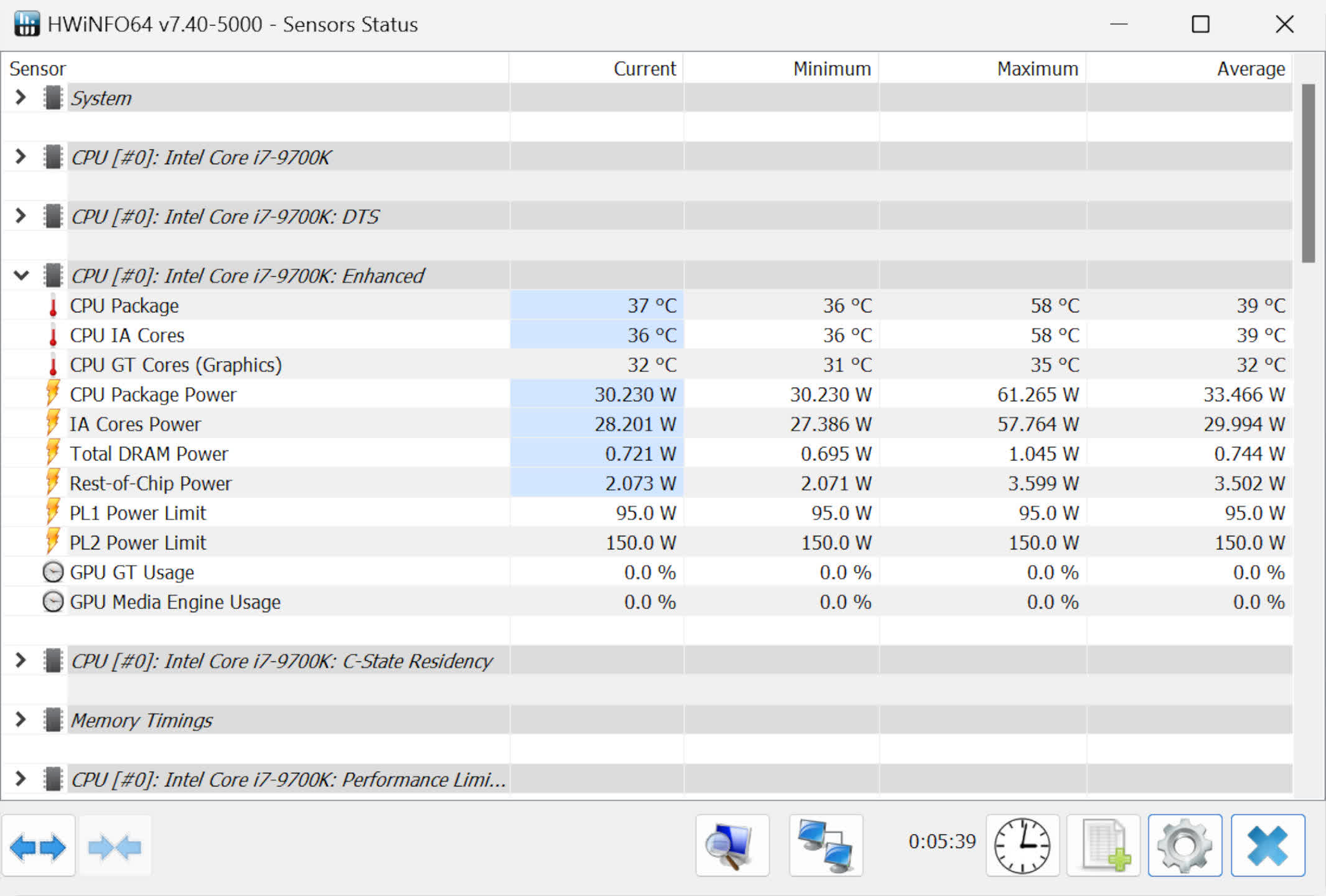
- Software Monitoring Tools (e.g., HWMonitor, HWiNFO64, GPU-Z): These applications read sensors on your CPU, GPU, and motherboard to provide estimated power consumption for individual components (DC power).
- Pros: Component-specific data, real-time tracking, often free.
- Cons: Estimates, not direct measurements. Relies on sensor accuracy. Doesn’t account for PSU efficiency or other system components.
- Specialized Hardware (e.g., NVIDIA PCAT, ElmorLabs Power Measurement Tools): These are advanced tools used by reviewers and enthusiasts for highly accurate, real-time DC power measurements of specific components (especially GPUs). They often sit inline between the PSU and the component.
- Pros: Extremely accurate, captures transient spikes, direct DC power measurement.
- Cons: Expensive, complex to set up, generally not for the average user.
- Digital Multimeter with Clamp Meter: Can be used by experienced users to measure current directly from PSU cables, but requires careful handling and knowledge of electrical circuits.
Test Scenarios:
To get a comprehensive understanding, tests should cover a range of usage scenarios:
- Idle Desktop: PC sitting at the Windows desktop with no applications running beyond essential background processes. This represents the lowest possible power draw.
- Web Browsing/Productivity: A typical light load, involving multiple browser tabs, office applications, and minor background tasks.
- Light Gaming: Playing less demanding or older titles, or modern games at lower settings/resolutions. This helps establish a baseline for actual gaming.
- Heavy Gaming (AAA Titles): This is where modern gaming PCs truly shine and consume the most power. Test with:
- Max Settings: Ultra graphics, highest resolution (e.g., 4K).
- Ray Tracing/Path Tracing: Enabling these highly demanding features pushes GPUs to their limits.
- High Refresh Rates: Aiming for 120Hz, 144Hz, or higher significantly increases GPU utilization.
- Synthetic Stress Tests: These tools push components to their absolute maximum, often revealing peak power draw:
- GPU Stress Tests: FurMark, 3DMark (Time Spy Extreme, Port Royal).
- CPU Stress Tests: Prime95, Cinebench R23, AIDA64 (FPU stress test).
- Combined Stress Tests: AIDA64’s full system stress test.
- Mixed Usage: Simulate common multi-tasking, such as gaming while streaming to Twitch, or rendering video in the background.
Key Metrics to Record:
- Average Power Consumption: Over a sustained period (e.g., 5-10 minutes) during each scenario.
- Peak Power Consumption: The highest wattage observed, especially during transient spikes in gaming or stress tests.
- Component-Specific Power (from software): For CPU (Package Power) and GPU (Board Power Draw).
Variables to Control:
To ensure consistency and comparability, keep the following consistent:
- Room Temperature: Affects cooling efficiency and potential throttling.
- Background Applications: Minimize unnecessary processes.
- Driver Versions: Use the same CPU and GPU drivers across tests.
- Windows Power Plan: Set to "High Performance" for gaming tests.
- Monitor: Ideally, use the same monitor or account for its individual power draw if measuring total system from the wall.
Deconstructing the Power Draw: Component by Component Analysis
Let’s break down where the power goes in a modern gaming PC.
-
Graphics Card (GPU):
- Dominant Factor: Easily 60-80% of total gaming power draw.
- Idle: Surprisingly low, often 10-30W, thanks to aggressive power-saving features.
- Gaming: Can range from 150W for mid-range cards to 450W+ for flagships.
- Transient Spikes: Can momentarily exceed average gaming draw by 1.5x-2x, demanding robust PSU design.
- VRAM: GDDR6/GDDR6X memory also contributes to GPU power.
-
Processor (CPU):
- Idle: Very efficient, often 5-20W.
- Gaming: Highly variable depending on the game and resolution. At 1080p, CPU might be a bottleneck and draw more power (e.g., 80-150W). At 4K, the GPU is usually bottlenecked, and CPU draw might be lower (e.g., 50-100W).
- Stress Tests: Can reach 200-300W for high-core-count, high-clock-speed CPUs.
-
Power Supply Unit (PSU):
- Efficiency: PSUs are not 100% efficient; some power is lost as heat. An 80 Plus Gold PSU is ~90% efficient at 50% load, meaning if your components draw 500W DC, the PSU pulls ~555W AC from the wall.
- ATX 3.0: Designed for higher efficiency at low loads and better handling of transient spikes, making it crucial for modern high-end builds.
-
Motherboard:
- Baseline: 20-50W on average, depending on chipset, VRM quality, and integrated features.
- VRMs: Convert 12V from the PSU to the lower voltages required by the CPU and other components, generating heat and consuming power in the process.
-
RAM (Memory):
- Low Draw: Relatively minor. A 32GB DDR5 kit might consume 10-20W under load. Overclocking can increase this slightly.
-
Storage (SSDs/HDDs):
- NVMe SSDs: Extremely efficient, typically 5-10W under heavy read/write.
- SATA SSDs: Even lower, 1-3W.
- HDDs: Mechanical drives consume more, around 5-10W when active, but often spin down when idle.
-
Fans and Peripherals:
- Case Fans: Each fan consumes a few watts (1-5W). A system with many fans can add 20-30W.
- AIO Pump: Typically 10-20W.
- USB Peripherals: Keyboards, mice, webcams, headsets can collectively add 10-30W.
- RGB Lighting: Adds a small amount, typically 5-15W for a full system.
Illustrative Test Results and Real-World Scenarios
While exact figures vary wildly based on specific components, here are some typical power consumption ranges for a modern high-end gaming PC (e.g., Core i7/Ryzen 7, RTX 4070 Ti/RX 7800 XT and up):
- System Off (but plugged in): <1W (Phantom/Vampire load)
- Idle Desktop: 60W – 120W (AC wall draw)
- Web Browsing/Light Productivity: 80W – 150W
- Light Gaming (e.g., Valorant, older titles): 200W – 400W
- Heavy Gaming (AAA, max settings, 1440p/4K): 450W – 800W (AC wall draw), with transient spikes potentially reaching 900W-1000W+
- Synthetic Stress Test (GPU only, e.g., FurMark): 350W – 600W+
- Synthetic Stress Test (CPU only, e.g., Prime95): 250W – 400W
- Combined Stress Test (AIDA64 FPU+GPU): 600W – 1000W+
It’s crucial to remember that these are system-wide AC wall draws, which include PSU efficiency losses. The DC power consumed by the components themselves will be lower.
Factors Influencing Power Consumption
Beyond the components themselves, several other factors can significantly impact power draw:
- Game Settings:
- Resolution: Higher resolutions demand more GPU power.
- Refresh Rate: Higher FPS targets (e.g., 144Hz vs. 60Hz) mean the GPU works harder and consumes more.
- Graphics Quality: Ultra settings, anti-aliasing, shadow quality, texture detail all increase GPU load.
- Ray Tracing/Path Tracing: These are incredibly demanding and can significantly increase GPU power draw, sometimes by over 100W compared to rasterization.
- Overclocking/Undervolting:
- Overclocking: Pushing clock speeds and voltages inevitably increases power consumption and heat.
- Undervolting: Reducing voltage while maintaining similar clock speeds can significantly lower power consumption and heat output with minimal performance loss, offering a "free" efficiency boost.
- Driver Optimization: GPU and CPU driver updates often include optimizations that can improve performance-per-watt.
- Ambient Temperature: A hotter room means components run hotter, potentially requiring more aggressive cooling (louder fans) and possibly leading to throttling, which can sometimes reduce power draw by limiting performance, or in other cases, increase it as components struggle to maintain clocks.
- PSU Efficiency Curve: PSUs are most efficient at around 50% load. Operating consistently at very low or very high loads can reduce efficiency.
- Background Processes: Running cryptocurrency miners, video renders, or multiple demanding applications in the background while gaming will increase overall system power draw.
Optimizing for Efficiency: Strategies for Gamers
Understanding power consumption is the first step; the next is to optimize it. Here’s how gamers can achieve a better balance between performance and power:
-
Smart Component Selection:
- GPU: Consider the performance-per-watt metric. Sometimes a slightly less powerful card offers significantly better efficiency for a minor performance trade-off.
- PSU: Invest in a high-quality ATX 3.0 PSU with an 80 Plus Gold or Platinum rating. The higher upfront cost is often offset by long-term electricity savings and improved system stability.
- CPU: While flagship CPUs offer peak performance, mid-to-high-range CPUs often provide excellent gaming performance with lower power envelopes.
-
In-Game Settings Adjustments:
- Frame Rate Caps: Capping your FPS to your monitor’s refresh rate (or slightly below) using V-Sync, G-Sync/FreeSync, or in-game settings can prevent your GPU from rendering unnecessary frames, significantly reducing power draw.
- Resolution Scaling: Using technologies like DLSS, FSR, or XeSS allows you to render at a lower internal resolution and upscale, providing near-native image quality with much lower power consumption.
- Graphics Presets: Often, the visual difference between "Ultra" and "High" settings is minimal, but the power saving can be substantial. Experiment to find your sweet spot.
-
Undervolting:
- GPU Undervolting: This is arguably the most impactful optimization. By slightly reducing the voltage supplied to the GPU core while maintaining clock speeds, you can significantly lower power consumption and heat, often with no perceptible performance loss, and sometimes even with slight gains due to reduced throttling. Tools like MSI Afterburner make this accessible.
- CPU Undervolting: Similar to GPUs, CPUs can often run stably at lower voltages than stock settings, leading to reduced power draw and heat. This usually requires tweaking in the BIOS.
-
Windows Power Plans:
- For non-gaming use, set your Windows power plan to "Balanced" or "Power Saver." When gaming, switch to "High Performance" or your motherboard’s optimized profile.
-
Monitor Settings:
- Enable monitor sleep settings. A monitor can consume 20-100W, so letting it sleep when not in use is a simple saving.
- Lower brightness when not critical.
-
System Maintenance:
- Keep your system clean. Dust buildup restricts airflow, forcing fans to work harder and components to run hotter, potentially leading to throttling or increased power draw.
- Ensure good case airflow. Proper fan placement can make a big difference in cooling efficiency.
The Future of Gaming PC Power Consumption
The trend of increasing power consumption in high-end gaming hardware is likely to continue for the foreseeable future, driven by the demand for higher fidelity, more complex simulations, and AI integration. However, manufacturers are also heavily investing in efficiency:
- Advanced Manufacturing Nodes: Smaller transistor sizes (e.g., 3nm, 2nm) allow for more transistors in the same space, potentially leading to higher performance at similar power levels or similar performance at lower power levels.
- Chiplet Designs: Breaking down complex chips into smaller, specialized chiplets allows for greater flexibility and potentially better power efficiency by optimizing each component for its specific task.
- AI-Driven Power Management: Future hardware and software may leverage AI to dynamically adjust power delivery and clock speeds based on real-time game demands, optimizing for performance and efficiency on the fly.
- Continued PSU Innovation: ATX 3.0 is just the beginning. Further advancements in power delivery standards and PSU efficiency are inevitable.
Conclusion
The modern gaming PC is a marvel of engineering, delivering unparalleled visual fidelity and immersive experiences. However, this power comes with an increasingly significant energy footprint. Understanding new gaming PC power consumption is no longer just for enthusiasts or environmentalists; it’s a practical necessity for every gamer.
By employing the right testing methodologies, analyzing component-level draw, and implementing smart optimization strategies, gamers can take control of their system’s energy usage. This knowledge not only leads to potential savings on electricity bills but also contributes to a cooler, quieter, more stable, and environmentally friendlier gaming setup. As hardware continues its relentless march forward, the judicious management of power will remain a cornerstone of intelligent PC building and gaming. So, plug in that power meter, fire up your favorite game, and start to unveil the power hungry beast within your own rig. The insights you gain will empower you to game smarter, not just harder.