The Ultimate Gauntlet: Unveiling New Gaming PC Performance Through Benchmarking
The pursuit of the perfect gaming experience is an endless odyssey for enthusiasts. With every passing year, hardware manufacturers push the boundaries of processing power, graphical fidelity, and immersive technologies. From hyper-realistic ray tracing to AI-powered upscaling and blazing-fast storage, a new gaming PC represents a significant investment and a promise of unparalleled digital adventures. But how do we truly quantify this promise? How do we ensure that our meticulously chosen components deliver on their potential? The answer lies in the rigorous, systematic process of new gaming PC benchmark performance testing.
This article delves deep into the world of benchmarking, exploring its methodologies, the critical components under scrutiny, the essential tools, and the art of interpreting results to unlock the true prowess of a modern gaming rig.
The Imperative of Performance Testing: Why We Benchmark
For many, building or buying a new gaming PC is akin to assembling a high-performance sports car. You wouldn’t just take it for a spin and assume it’s performing optimally; you’d want to see its quarter-mile times, its top speed, and how it handles corners under stress. Benchmarking serves this exact purpose for computers. It’s not merely about bragging rights; it’s a multi-faceted necessity:
- Validation and Verification: Benchmarks confirm that all components are functioning correctly and communicating efficiently, ensuring the system performs as advertised and as expected from its specifications.
- Comparison and Evaluation: They provide a standardized, objective metric to compare your system’s performance against other configurations, both online and in your personal testing history. This is crucial for making informed upgrade decisions.
- Optimization and Tuning: By pinpointing bottlenecks and areas of underperformance, benchmarks guide users in optimizing drivers, BIOS settings, and even overclocking parameters to extract maximum potential.
- Troubleshooting and Diagnostics: A sudden drop in benchmark scores can be an early indicator of a hardware fault, driver issue, or thermal problem, helping diagnose issues before they escalate.
- Future-Proofing and Longevity: Understanding your system’s baseline performance helps estimate its longevity for upcoming game titles and plan future upgrades strategically.
- Content Creation and Professional Use: For streamers, video editors, or 3D artists, gaming benchmarks also offer insights into the system’s overall processing capabilities for demanding creative workloads.
The landscape of PC gaming is more demanding than ever. Modern titles incorporate sophisticated rendering techniques like ray tracing, path tracing, and complex physics simulations. High refresh rate monitors (144Hz, 240Hz, 360Hz) at resolutions up to 4K make consistent, high frame rates a premium. Technologies like NVIDIA’s DLSS and AMD’s FSR, while enhancing performance, also introduce new variables that require careful benchmarking to understand their true impact.
Core Components Under the Microscope
A gaming PC is a symphony of interconnected parts, each playing a vital role in the overall performance. Benchmarking methodologies target these components individually and collectively to paint a complete picture.
1. The Graphics Processing Unit (GPU): The King of Gaming Performance
Undoubtedly, the GPU is the single most critical component for gaming performance. It’s responsible for rendering every pixel on your screen, handling complex textures, lighting, shadows, and special effects. Modern GPUs feature thousands of processing cores, dedicated ray tracing cores, and tensor cores for AI acceleration (like DLSS).
What to test:
- Raw Shader Performance: How fast it can process graphical instructions.
- Texture Fill Rate: How quickly it can apply textures to objects.
- Pixel Fill Rate: How many pixels it can render per second.
- Memory Bandwidth: The speed at which the GPU can access its dedicated video memory (VRAM).
- Ray Tracing Performance: Its ability to simulate realistic light paths.
- AI Upscaling Performance: The efficiency of technologies like DLSS/FSR.
2. The Central Processing Unit (CPU): The Orchestrator
While the GPU renders the graphics, the CPU acts as the brain of the operation. It manages game logic, AI, physics, audio, networking, and prepares draw calls for the GPU. A powerful CPU ensures that the GPU is fed a constant stream of data, preventing a "CPU bottleneck" where the GPU sits idle waiting for instructions. Modern CPUs feature multiple cores and threads, high clock speeds, and large caches.
What to test:
- Single-Core Performance: Crucial for older games or those not heavily multi-threaded.
- Multi-Core Performance: Essential for modern titles, background tasks, streaming, and content creation.
- IPC (Instructions Per Cycle): A measure of efficiency.
- Clock Speed: How many cycles per second the CPU can perform.
- Cache Latency: Speed of accessing data from different cache levels.
3. Random Access Memory (RAM): Speed and Capacity
RAM acts as the short-term memory for your system, storing data the CPU needs to access quickly. For gaming, both capacity and speed are important. DDR4 and now DDR5 RAM offer significant performance uplifts over older generations.
What to test:
- Capacity: 16GB is the current sweet spot for gaming, with 32GB becoming increasingly relevant.
- Speed (MHz): Higher clock speeds generally improve performance, especially with AMD Ryzen CPUs.
- Timings (CL Latency): Lower timings (e.g., CL16 vs. CL18) indicate faster response times.
- Bandwidth: The rate at which data can be transferred to and from RAM.
4. Storage Solutions: NVMe SSDs and Load Times
While storage doesn’t directly impact in-game FPS (once the game is loaded), it dramatically affects load times, level transitions, and overall system responsiveness. NVMe Solid State Drives (SSDs), especially PCIe Gen4 and Gen5, offer phenomenal read/write speeds compared to traditional SATA SSDs or HDDs.
What to test:
- Sequential Read/Write Speeds: How fast large files can be transferred.
- Random Read/Write Speeds: Critical for operating system responsiveness and loading small game assets.
- IOPS (Input/Output Operations Per Second): A measure of how many read/write operations can be performed per second.
5. Power Supply Unit (PSU) and Cooling: The Unsung Heroes
These components don’t directly boost performance scores but are absolutely critical for stability and sustained performance. An inadequate PSU can lead to system crashes or instability under load, while poor cooling can cause thermal throttling, where components reduce their clock speeds to prevent overheating, leading to significant performance drops.
What to test (indirectly):
- Stability under load: No crashes or unexpected shutdowns during intense benchmarks.
- Temperature monitoring: Ensuring CPU and GPU temperatures remain within safe operating limits.
- Clock speed consistency: Confirming components maintain their boost clocks without throttling.
The Arsenal of Benchmarking Tools
A vast array of software tools exists, each designed to test specific aspects of a PC’s performance. They generally fall into two categories: synthetic and real-world.
1. Synthetic Benchmarks: Precision in a Controlled Environment
Synthetic benchmarks are purpose-built applications designed to stress specific components using proprietary algorithms. They provide consistent, repeatable scores that are excellent for direct comparisons.
- 3DMark (UL Benchmarks): The industry standard for GPU and overall gaming performance.
- Time Spy (DX12): Excellent for modern gaming rigs, especially with high-end GPUs.
- Fire Strike (DX11): Still relevant for broader comparisons, especially older hardware.
- Port Royal / Speed Way (Ray Tracing): Dedicated tests for ray tracing capabilities.
- CPU Profile: Focuses on CPU multi-threading.
- Unigine Superposition / Heaven: Beautiful, graphically intensive benchmarks that stress the GPU with intricate scenes and advanced rendering techniques. Great for stability testing and general GPU comparisons.
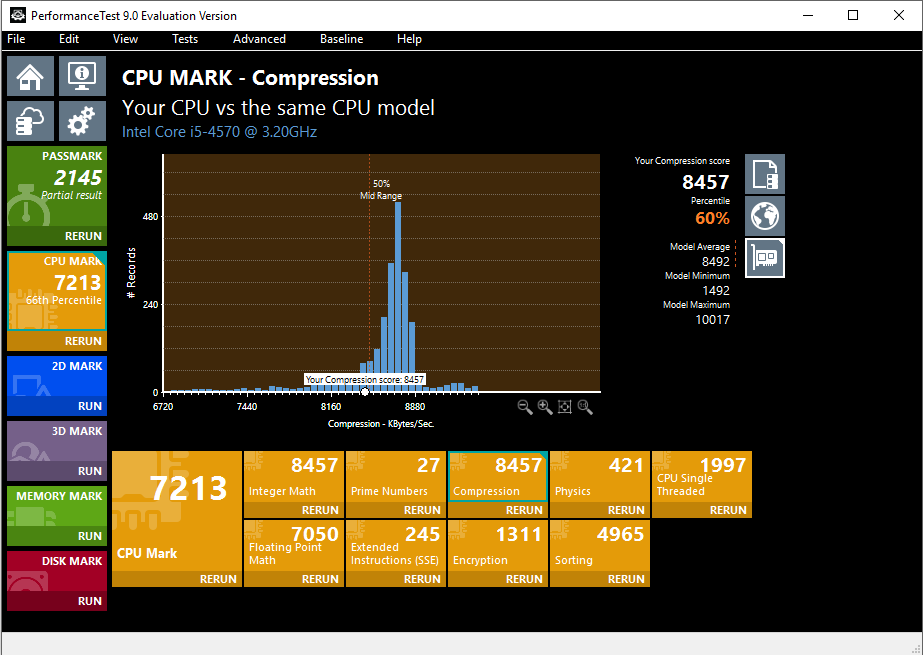
- Cinebench R23: Primarily a CPU benchmark, it renders a complex 3D scene using all available cores and threads. Excellent for gauging multi-core performance.
- PCMark 10: A holistic system benchmark that simulates various real-world workloads, including web browsing, video conferencing, digital content creation, and gaming. Useful for understanding overall system responsiveness.
- Blender Benchmark: Uses the popular open-source 3D creation suite to render scenes, providing real-world performance metrics for CPU and GPU rendering.
- CrystalDiskMark: The go-to tool for measuring storage drive (SSD/HDD) read and write speeds.
- AIDA64 Extreme: A comprehensive system information, diagnostic, and benchmarking tool. Its memory and cache benchmark is invaluable for RAM performance.
2. Real-World Gaming Benchmarks: The True Test
While synthetic benchmarks provide controlled environments, nothing truly replicates the demands of actual gaming like, well, actual gaming. Many modern games include built-in benchmark modes, offering highly repeatable scenarios.
- In-Game Benchmarks:
- Cyberpunk 2077: Extremely demanding, especially with ray tracing.
- Red Dead Redemption 2: Known for its stunning visuals and resource intensity.
- Assassin’s Creed Valhalla / Mirage: Ubisoft titles often feature robust benchmarks.
- Forza Horizon 5: Visually rich and a good test of open-world performance.
- Shadow of the Tomb Raider: A classic benchmark with multiple scenes.
- F1 23 / Microsoft Flight Simulator: Excellent for testing CPU and GPU interaction.
- Monitoring Tools (for games without built-in benchmarks):
- MSI Afterburner with RivaTuner Statistics Server (RTSS): The ubiquitous tool for overlaying real-time performance metrics (FPS, frame time, CPU/GPU usage, temperatures) in any game. It also allows for custom fan curves and overclocking.
- CapFrameX / OCAT: Advanced frame capture and analysis tools that provide incredibly detailed frame time data.
3. Stress Tests: Pushing the Limits
Stress tests are designed to push components to their absolute limits for extended periods, primarily to test stability, cooling solutions, and identify potential throttling.
- FurMark: An extremely intensive GPU stress test, often called "GPU burner." Use with caution.
- Prime95: A CPU-intensive stress test that calculates Mersenne primes. Excellent for checking CPU stability, especially after overclocking.
- OCCT (OverClocking Checking Tool): Offers various CPU, GPU, and PSU stability tests, providing detailed monitoring.
Key Performance Metrics and What They Mean
Understanding the numbers is as crucial as running the tests.
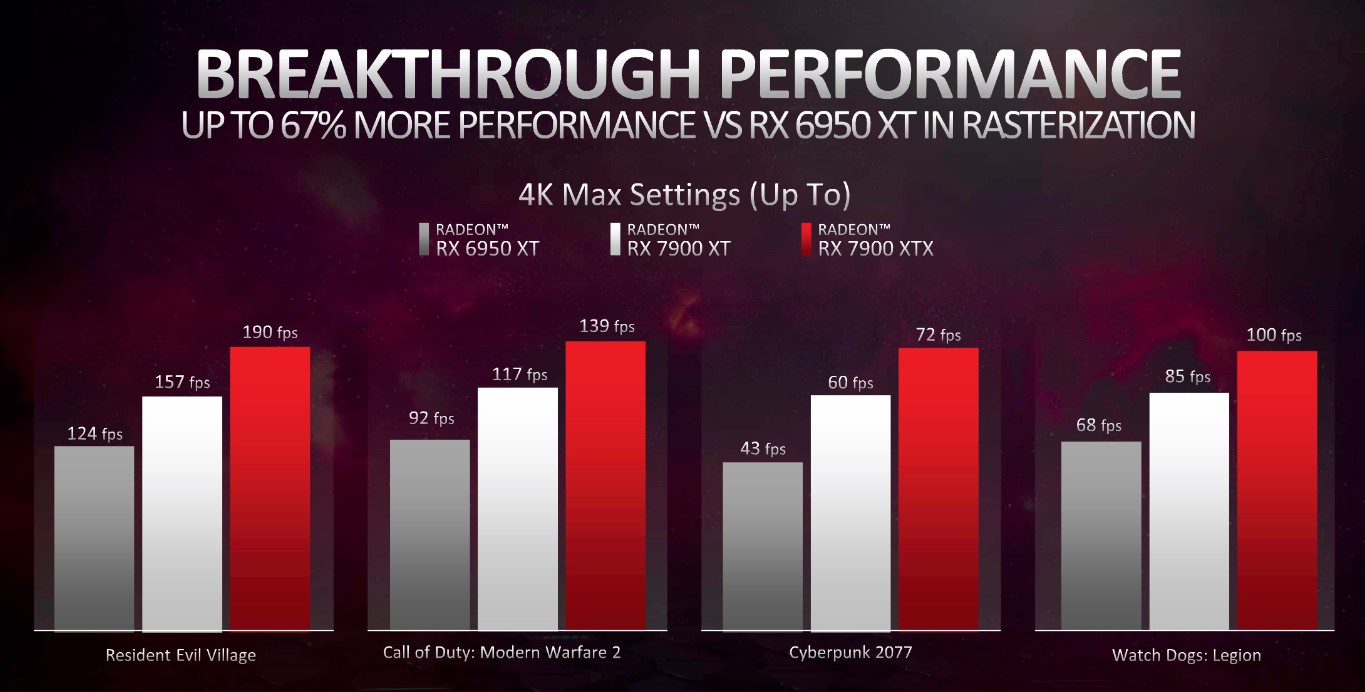
1. Frames Per Second (FPS): Average, 1% Low, 0.1% Low
- Average FPS: The most common metric, representing the average number of frames rendered per second over a test period. Higher is generally better.
- 1% Low FPS: The frame rate at which 99% of frames are rendered faster. This metric indicates how well the system handles minor stutters or dips in performance. A higher 1% low means a smoother experience, even if the average FPS is similar.
- 0.1% Low FPS: An even stricter measure, representing the bottom 0.1% of frame rates. This is crucial for identifying severe, albeit brief, stutters or hitches that can significantly detract from perceived smoothness.
For a truly smooth gaming experience, you want not just a high average FPS, but also 1% and 0.1% lows that are as close as possible to the average, indicating consistent frame delivery.
2. Frame Time: The Smoother Experience
Frame time (measured in milliseconds, ms) is the inverse of FPS: it’s the time it takes to render a single frame. A lower, more consistent frame time graph indicates a smoother experience. For example, 60 FPS corresponds to 16.67 ms frame time. Wild fluctuations in frame time, even if the average FPS is high, lead to a "choppy" or "stuttery" feeling.
3. Latency: Input Responsiveness
- Input Lag: The delay between a user input (mouse click, keypress) and the corresponding action appearing on screen. While not directly measured by most benchmarks, consistent high FPS and low frame times contribute to lower input lag. NVIDIA’s Reflex and AMD’s Anti-Lag aim to reduce this.
- System Latency: A broader measure encompassing input lag, rendering lag, and display lag. Specific tools and methodologies are emerging to measure this more precisely.
4. Temperatures, Power Draw, and Noise Levels
These aren’t direct performance metrics but are critical for sustained performance and system health. High temperatures lead to thermal throttling. Excessive power draw can strain the PSU and generate more heat. High noise levels from fans can detract from the immersive experience. Monitoring these during benchmarks is vital.
Crafting a Robust Benchmarking Methodology
To ensure accurate and comparable results, a systematic approach is essential.
-
Preparation is Key:
- Clean Driver Installation: Always use the latest stable GPU drivers. Consider using Display Driver Uninstaller (DDU) for a clean sweep when upgrading drivers or GPUs.
- Update All Software: Ensure Windows, BIOS/UEFI, and chipset drivers are up-to-date.
- Disable Background Processes: Close all unnecessary applications, browser tabs, and background services to minimize interference.
- Power Settings: Set Windows Power Plan to "High Performance" or "Ultimate Performance."
- Antivirus/Firewall: Temporarily disable them if they interfere, but be cautious.
- Restart System: A fresh boot ensures the system is in a clean state.
-
Consistent Test Environment:
- Resolution and Settings: Choose a consistent resolution (e.g., 1080p, 1440p, 4K) and graphics preset (e.g., High, Ultra, Medium). Stick to these for all comparisons.
- Vertical Sync (V-Sync) Off: Always disable V-Sync during benchmarks to allow the GPU to render as many frames as possible.
- Monitor Refresh Rate: Set your monitor to its highest refresh rate.
-
Multiple Runs for Validity: Run each benchmark or game test at least three times. Discard any anomalous results and take the average of the consistent runs. This mitigates variance from background tasks or system fluctuations.
-
Monitoring and Logging: Use tools like MSI Afterburner, HWiNFO64, or CapFrameX to log detailed data during tests:
- CPU/GPU usage (%)
- CPU/GPU clock speeds (MHz)
- CPU/GPU temperatures (°C)
- RAM usage and frequency
- Power draw (W)
- FPS, 1% Low, 0.1% Low, Frame Time
Decoding the Numbers: Interpreting Your Results
Once you have your data, the real work begins.
-
Identifying Bottlenecks:
- GPU Bottleneck: If your GPU usage consistently hovers around 99-100% while your CPU usage is relatively low (e.g., 40-70%), your GPU is the limiting factor. This is often desirable in gaming, as it means you’re getting the most out of your most expensive component.
- CPU Bottleneck: If your CPU usage (or a few core usages) is very high (e.g., 90-100%) and your GPU usage is significantly lower (e.g., 60-80%), your CPU is holding back your GPU. This can lead to lower average FPS and more pronounced stutters (lower 1% and 0.1% lows). This is more common at lower resolutions or with very high refresh rate monitors.
- RAM Bottleneck: Less common, but insufficient RAM capacity or slow RAM speeds can lead to stuttering, especially in open-world games.
- Storage Bottleneck: Primarily affects load times, not in-game FPS.
-
Comparing Against the Global Database: Websites like 3DMark’s online results browser, TechPowerUp’s GPU database, or various hardware review sites offer vast databases of benchmark scores. Compare your results to similar configurations to see if your system is performing as expected. Significant deviations could indicate an issue.
-
Understanding Diminishing Returns: At a certain point, investing more money into a component yields increasingly smaller performance gains. For example, going from 3200MHz CL16 RAM to 3600MHz CL16 might provide a noticeable boost, but 4000MHz CL16 might offer only marginal gains at a much higher cost. Benchmarks help quantify these returns.
-
Setting Realistic Expectations: Not every system will hit 200 FPS at 4K Ultra with ray tracing enabled. Benchmarks help you understand what your specific hardware combination is realistically capable of, allowing you to adjust in-game settings for the best balance of visual fidelity and smooth performance.
Beyond Benchmarking: Optimizing for Peak Performance
Benchmarking isn’t the end; it’s a diagnostic step. The insights gained should inform optimization efforts.
-
Driver Updates and System Tweaks: Regularly update GPU drivers. Experiment with NVIDIA Control Panel or AMD Adrenalin settings. Ensure Windows Game Mode is enabled.
-
Overclocking: The Quest for Extra Power:
- GPU Overclocking: Using tools like MSI Afterburner or ASUS GPU Tweak, you can increase GPU core clock and memory clock speeds. Requires careful testing and monitoring of temperatures and stability.
- CPU Overclocking: Often done through BIOS/UEFI, increasing CPU core voltage and clock speeds. Requires a robust cooler and thorough stress testing.
- RAM Overclocking (XMP/DOCP): Enabling the Extreme Memory Profile (XMP for Intel) or D.O.C.P. (for AMD) in BIOS automatically sets RAM to its advertised speed and timings, which is a form of safe overclocking. Manual tuning can extract even more.
- Caution: Overclocking voids warranties, increases heat output, and can lead to instability if not done carefully. Always proceed with caution and thorough testing.
-
Cooling Solutions and Airflow: Ensure adequate case airflow. Consider upgrading to a better CPU cooler (AIO liquid cooler or high-end air cooler) or adding/replacing case fans if temperatures are high. Lower temperatures allow components to boost to higher clocks for longer.
-
In-Game Settings Optimization: Use your benchmark data to fine-tune in-game settings. If you’re GPU-bound, reduce demanding settings like shadows, reflections, volumetric clouds, or anti-aliasing. If CPU-bound, reduce settings related to AI, crowd density, or physics. Experiment with DLSS/FSR/XeSS for significant performance boosts at minimal visual cost.
The Horizon of Performance Testing
The world of PC gaming and hardware is constantly evolving, and so too are the demands on benchmarking.
- Ray Tracing and Path Tracing Metrics: As these technologies become more prevalent, benchmarks will need to evolve to more accurately reflect their performance impact and visual quality.
- AI Upscaling and Frame Generation Technologies: DLSS 3 (Frame Generation), FSR 3, and Intel’s XeSS require specialized testing to quantify their performance benefits and assess any latency or artifacting.
- VR/AR Specific Benchmarks: As virtual and augmented reality mature, dedicated benchmarks will emerge to measure critical metrics like motion-to-photon latency, consistent high frame rates, and reprojection capabilities.
- Cloud-Based Benchmarking and Data Analytics: The future might see more sophisticated cloud-based benchmarking platforms that collect vast amounts of anonymized data, providing even more precise comparisons and deeper insights into hardware performance trends.
Conclusion
A new gaming PC is more than just a collection of cutting-edge components; it’s a promise of immersive worlds and unparalleled performance. Benchmarking is the rigorous process by which we hold that promise accountable. It transforms subjective feelings of "smoothness" into objective, quantifiable data, empowering gamers and enthusiasts to validate their investments, optimize their systems, troubleshoot issues, and make informed decisions for future upgrades.
By embracing a meticulous benchmarking methodology, leveraging the right tools, and intelligently interpreting the results, every owner of a new gaming PC can unlock its full potential, ensuring that their journey into the digital realm is as breathtaking and seamless as possible. The ultimate gauntlet has been thrown, and through benchmarking, we conquer it, frame by glorious frame.